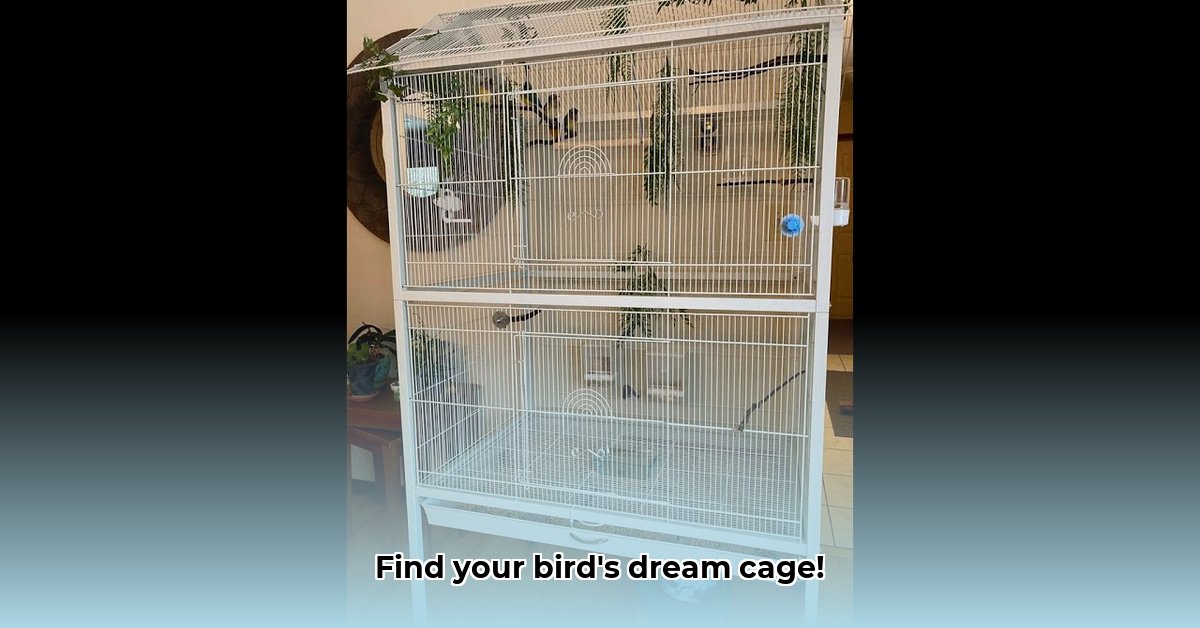
Finding the ideal bird cage from Tractor Supply is crucial for your feathered friend's health and happiness. This comprehensive guide will help you choose the perfect cage, ensuring your bird thrives in a safe and stimulating environment. For added convenience, check out these helpful egg holders.
Sizing Up Your Bird's Needs: Space Matters!
Your bird's cage is its home, and adequate space is paramount. Cage size directly correlates with your bird's well-being. A cramped cage leads to stress and health issues. The necessary space depends heavily on your bird's species and size. A small finch needs less room than a large parrot. Activity level also plays a role; more active birds need more space to fly and climb.
Before selecting a cage, research your bird's specific needs. Consult an avian veterinarian or reputable online resources for species-specific size recommendations. Remember, a comfortable bird is a happy bird. Did you know that insufficient space can lead to behavioral problems and even reduce lifespan?
Choosing the Right Material: Wood vs. Metal
Tractor Supply offers both wood and metal bird cages each with advantages and disadvantages.
Metal Cages:
- Pros: Durable, easy to clean, and generally more affordable.
- Cons: May not be as aesthetically pleasing to some, and some birds may be prone to chewing on metal.
Wood Cages:
- Pros: Often visually appealing and create a more natural environment.
- Cons: More expensive, require more careful cleaning to prevent bacterial growth, and can be chewed by some birds, potentially releasing splinters and causing injuries.
When choosing irrespective of material, prioritize robust construction. The cage must be free from sharp edges or hazardous components that could harm your bird.
Essential Cage Features: Safety and Comfort First
Several key features enhance cage safety and enrich your bird's environment.
- Bar Spacing: Crucial for safety, bar spacing must be appropriate for your bird to prevent escapes and injuries. Incorrect spacing can lead to trapped limbs or escapes, creating stress and dangers. Incorrect spacing can even lead to injury.
- Door Design: The door needs to be secure yet easy to access. It should be easy to open without compromising your bird’s safety.
- Ease of Cleaning: Easy-to-clean cages prevent bacterial buildup and promote hygiene. Removable trays and easily cleaned surfaces are essential.
- Tray Design: A deep tray helps contain mess and simplifies cleaning.
These features are not merely nice-to-haves; they are crucial for your bird's health.
Setting Up Your Bird's New Home: Choosing the Right Spot
Careful placement is essential. Your bird needs protection from drafts, direct sunlight (which can cause overheating), and areas with heavy foot traffic. Choose a quiet, secure spot where your bird can comfortably observe its surroundings. Ensure a sturdy, stable surface.
Enriching Your Bird's Life: Accessories Matter!
A cage is merely a shell; enrichment is key to a happy bird.
- Perches: Offer a variety of sizes and textures to promote healthy feet.
- Toys: Rotate toys regularly to prevent boredom and mental stimulation. Choose age and species-appropriate toys.
- Food and Water Dishes: Ensure easy access to clean, fresh food and water.
A stimulating environment is vital for your bird's mental and physical well-being.
Protecting Your Bird: Outdoor Cage Considerations
If placing your cage outdoors, predator-proofing is essential. A sturdy, secure cage with strong locks and a protective cover is crucial, especially in areas with local predators.
Cleaning and Maintenance: A Healthier Habitat
Regular cleaning minimizes disease risks. Perform daily spot cleaning, and a thorough weekly cleaning is vital. Monthly deep cleaning, including thorough disinfection, is also recommended. Replace food and water daily. Cleanliness contributes significantly to a healthy bird.
Your Feathered Friend's Future: A Final Note
Choosing the right cage is a significant investment in your bird's health and happiness. By considering your bird's specific needs, examining cage features and materials, and implementing proper setup, cleaning, and enrichment practices, you'll create a thriving home for your cherished companion. A happy bird is a healthy bird!